
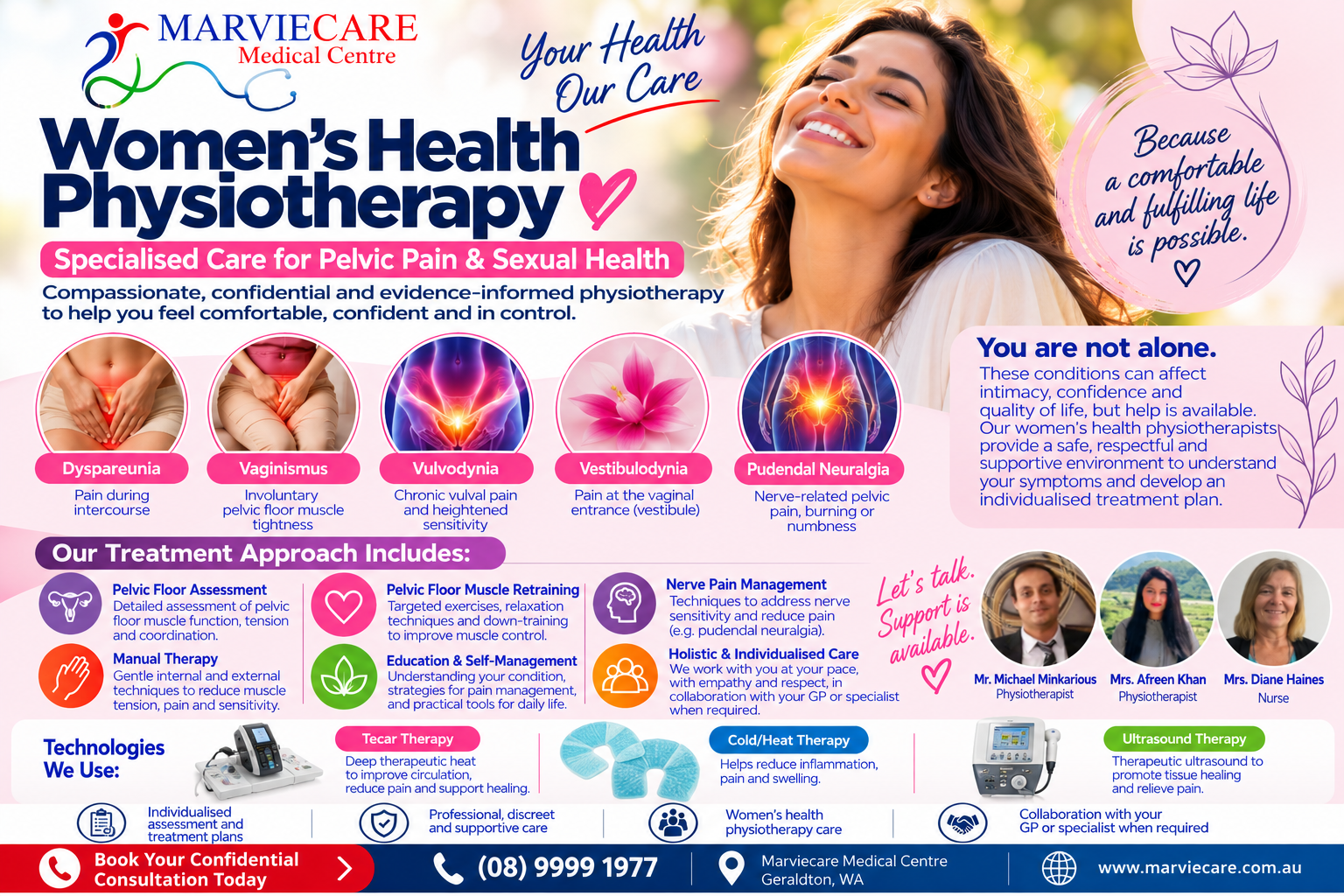
Pain and Sexual Dysfunction
Specialised Care for Pelvic Pain, Sexual Health and Pelvic Floor Rehabilitation
At Marviecare Medical Centre, we provide compassionate, confidential and individualised women’s health physiotherapy services. Our approach combines pelvic floor rehabilitation, manual therapy, patient education and appropriate therapeutic technologies to help women manage pain, improve pelvic floor function and enhance their quality of life.
The following descriptions are suitable for individual service sections on your website.
Conditions We Treat
1. Dyspareunia – Pain During Intercourse
Helping Restore Comfort, Confidence and Intimacy
Dyspareunia refers to persistent or recurring pain experienced before, during or after sexual intercourse. It may be associated with pelvic floor muscle tension, hormonal changes, scar tissue, vulvovaginal conditions or other pelvic health concerns.
Our physiotherapy management may include pelvic floor assessment, relaxation and down-training exercises, gentle manual therapy, biofeedback, graded exposure techniques and pain education. Treatment is tailored to the underlying contributors and individual comfort levels, with the aim of reducing pain and improving sexual wellbeing.
2. Vaginismus
Supporting Pelvic Floor Relaxation and Comfortable Intimacy
Vaginismus involves involuntary tightening or guarding of the pelvic floor muscles associated with attempted vaginal penetration, which may cause discomfort, pain or difficulty with intercourse, tampon insertion or gynaecological examinations.
Our treatment focuses on pelvic floor relaxation, breathing techniques, muscle coordination, biofeedback, gentle manual therapy and gradual vaginal trainer programs where appropriate. We provide a supportive, consent-based approach to help improve comfort, confidence and pelvic floor control.
3. Vulvodynia
Individualised Management for Persistent Vulval Pain
Vulvodynia is persistent vulval pain lasting at least three months without a clearly identifiable cause. Symptoms may include burning, stinging, irritation, tenderness or heightened sensitivity, which can affect sitting, exercise, clothing tolerance and intimacy.
Our physiotherapy services may include pelvic floor muscle assessment, relaxation training, gentle soft tissue techniques, pain neuroscience education, desensitisation strategies and activity modification. We work collaboratively with medical practitioners when further investigation or multidisciplinary care is required.
4. Vestibulodynia
Supporting Comfort and Reducing Sensitivity at the Vaginal Entrance
Vestibulodynia is pain or increased sensitivity affecting the vestibule, the tissue surrounding the vaginal opening. Symptoms may be triggered by touch, intercourse, tampon insertion or pelvic examinations.
Our treatment may include pelvic floor down-training, gentle desensitisation techniques, biofeedback, graded vaginal trainer therapy, manual therapy and pain management education. Treatment aims to improve tissue tolerance, reduce muscle guarding and support comfortable daily and intimate activities.
5. Pudendal Neuralgia
Specialised Physiotherapy for Pelvic Nerve-Related Pain
Pudendal neuralgia involves pain associated with irritation or dysfunction of the pudendal nerve, which supplies sensation to parts of the pelvic floor and genital region. Symptoms may include burning, shooting pain, tingling, numbness or discomfort that worsens with prolonged sitting.
Our physiotherapy management may include pelvic floor muscle relaxation, assessment of contributing musculoskeletal factors, gentle manual therapy, nerve-related pain education, sitting modifications and graded movement rehabilitation.
Treatment is individualised, with medical referral where appropriate to investigate other potential causes of pelvic pain
Physiotherapy – Treatment Services
Advanced, Individualised Treatment for Pelvic Floor Dysfunction, Pelvic Pain and Sexual Health
At Marviecare Medical Centre, we offer a range of physiotherapy treatments combining hands-on techniques, specialised rehabilitation and therapeutic technologies to support pelvic health, reduce discomfort and improve quality of life.
1. Pelvic Floor Assessment
Understanding Your Pelvic Floor Function
Comprehensive assessment of pelvic floor muscle strength, endurance, coordination, relaxation and muscle tension. Where appropriate, assessment may include external or internal examination, biofeedback and ultrasound imaging to guide individualised treatment planning.
2. Pelvic Floor Muscle Rehabilitation
Restoring Strength, Relaxation and Control
Individualised rehabilitation programs designed to improve pelvic floor strength, endurance, coordination and relaxation. Treatment may include strengthening exercises, down-training, breathing techniques and functional pelvic floor retraining.
3. Manual Therapy & Soft Tissue Mobilisation
Reducing Muscle Tension and Improving Mobility
Specialised hands-on techniques to address pelvic floor muscle tension, myofascial restrictions, scar sensitivity and associated musculoskeletal discomfort. Treatment may involve external or internal manual therapy where clinically appropriate and consented to.
4. Pelvic Nerve Pain Management
Supporting Comfort and Reducing Nerve Sensitivity
Individualised treatment for selected nerve-related pelvic pain conditions, including pudendal neuralgia. Management may include gentle manual therapy, pelvic floor relaxation, pain education, activity modification and graded rehabilitation.
5. Pelvic Floor Biofeedback Therapy
Improving Muscle Awareness and Coordination
Biofeedback technology provides visual or auditory information about pelvic floor muscle activity, helping patients identify, contract and relax their muscles more effectively. It may assist rehabilitation for incontinence, pelvic floor weakness, poor coordination and selected pelvic pain conditions.
6. Vaginal & Anal Electrical Stimulation
Specialised Pelvic Floor Rehabilitation Technology
Electrical stimulation may be used for selected pelvic floor dysfunctions, including urinary or bowel incontinence, where appropriate following clinical assessment. Treatment aims to support muscle activation or other rehabilitation goals and is performed with informed consent.
7. TECAR Therapy
Radiofrequency Technology for Selected Rehabilitation Needs
TECAR therapy uses radiofrequency energy to produce controlled tissue heating and may be considered as an adjunct for selected musculoskeletal or soft tissue conditions. Its effectiveness for pelvic pain disorders remains uncertain, and treatment suitability is assessed individually.
8. Therapeutic Ultrasound
Adjunctive Treatment for Selected Soft Tissue Conditions
Therapeutic ultrasound uses high-frequency sound waves and may be incorporated into treatment for selected musculoskeletal conditions. Evidence for its effectiveness in pelvic pain is limited, so it is considered only when clinically appropriate.
9. Cold & Heat Therapy
Supporting Pain Relief and Muscle Relaxation
Individualised cold and heat therapy may help provide temporary relief from pain, muscle tension and discomfort. Our physiotherapists advise patients on safe application and appropriate use based on their symptoms.
10. Vaginal Trainer & Desensitisation Therapy
Gradually Improving Comfort and Tissue Tolerance
Guided vaginal trainer programs and graded desensitisation techniques may help women experiencing vaginismus, vestibulodynia and pain associated with penetration. Treatment focuses on pelvic floor relaxation, confidence, gradual exposure and patient-controlled progression.
11. Scar Mobilisation & Post-Surgical Rehabilitation
Supporting Tissue Mobility and Recovery
Gentle scar mobilisation and rehabilitation for women recovering from caesarean section, gynaecological surgery and other pelvic or abdominal procedures. Treatment may help address scar tightness, movement restrictions and discomfort once healing is sufficient.
12. Education & Self-Management
Empowering Women Through Knowledge and Practical Strategies
Individualised education covering pelvic floor function, bladder and bowel habits, pain management, sexual health, relaxation techniques and home exercises to support long-term wellbeing.
Book Your Confidential Women’s Health Physiotherapy Appointment